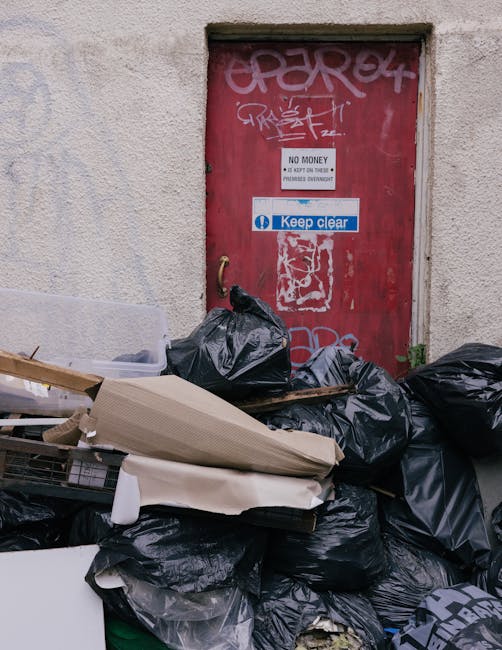
Avoid hidden rubbish removal charges in Rotherhithe: a practical guide to clear, fair pricing
If you have ever booked a clearance and then felt that sinking moment when the final bill arrives, you are not alone. Hidden rubbish removal charges in Rotherhithe can turn a simple job into an annoying, expensive one very quickly. The good news? Most of these surprises are avoidable once you know what to look for, what to ask, and how honest pricing usually works. This guide walks you through the main traps, the right questions to ask before you book, and the small details that make a big difference on the day.
Whether you are clearing a flat near the river, tidying a basement storage room, dealing with builders' waste, or just shifting a few bulky items, the aim is the same: get a proper price, keep control of the job, and avoid those awkward add-ons that seem to appear from nowhere. Let's face it, nobody enjoys arguing about "extra labour" while a van is already on the kerb.
Why hidden rubbish removal charges matter
Hidden charges are not just a budgeting nuisance. They can distort the whole decision-making process. A quote that looks cheap at first glance can end up costing more than a slightly higher but fully transparent price. That is especially frustrating when you are already dealing with the practical stress of clearing space, working to a deadline, or preparing a property for sale or letting.
In Rotherhithe, where many homes and businesses have tight access, limited parking, or shared entrances, the risk of extra fees can rise if the scope is not explained properly in advance. A narrow stairwell, a fourth-floor flat, or a double-parked van situation can all affect the job. Fair enough, some of that may be legitimate. The issue is when it is not explained before you agree.
What hidden charges often do is shift the burden onto the customer after the fact. That is poor practice. A proper rubbish removal service should make the cost structure clear from the start, even if the final price depends on weight, volume, item type, or access conditions.
Expert summary: The safest way to avoid hidden rubbish removal charges in Rotherhithe is to compare like for like, ask for the full cost breakdown upfront, and make sure the quote reflects access, labour, and disposal needs before anyone arrives.
If you want to understand the wider service landscape before booking, it can help to review the provider's main waste removal information and check their pricing and quotes guidance as well. That gives you a better sense of how the company handles transparency, not just what the headline price says.
How hidden rubbish removal charges in Rotherhithe works
Most rubbish removal services price jobs using some combination of volume, item type, labour time, access difficulty, and disposal fees. That is normal. A quote may be based on how much space your waste takes in a vehicle, how heavy it is, or whether the team needs to carry it down stairs, around tight corners, or out of a property with restricted access.
Problems start when these factors are not discussed clearly. For example, a customer might describe a "few bags and an old wardrobe", but the actual job includes soaked carpet offcuts, plasterboard, and a heavy sofa from a top-floor flat. That is a very different clearance. If the provider did not ask the right questions, the quote may be revised on arrival. Not always unfair, but not ideal either.
In a well-run booking process, you should expect the company to ask for:
- a description of the waste
- estimated quantity or number of items
- photos where helpful
- access details, such as stairs, lifts, parking, or loading distance
- any special items, like appliances or hazardous materials
- your preferred collection time and urgency
Sometimes the customer helps by sending a few clear photos. That can reduce guesswork and stop a quote wobbling later. It is not glamorous, but it works.
For certain jobs, you may also need to check whether particular items need specialist handling. A broken fridge, for instance, may be handled differently from general household junk. If you are clearing mixed waste, it is worth looking at pages such as fridge and appliance removal, mattress and sofa disposal, or hazardous waste disposal so you understand what may change the price.
Key benefits and practical advantages
Clear pricing does more than protect your wallet. It makes the whole clearance process calmer, faster, and easier to manage. That may sound obvious, but in real life it matters a lot.
- Better budgeting: You know what the job will cost before anyone lifts a bag.
- Less stress: No last-minute surprise fees or awkward conversations at the doorstep.
- Faster decision-making: When quotes are clear, you can compare providers properly.
- Fewer disputes: Transparent terms reduce misunderstandings later on.
- More suitable service choice: You can match the right service to the job, whether it is a flat clearance, office clearance, or builders' waste.
There is also a subtle but important practical advantage: better planning. If you know in advance that access is tricky, you can move items to the door, clear a hallway, or separate recycling from mixed rubbish. That can keep the job shorter and, in some cases, cheaper.
For example, if you are clearing a rented flat, you might discover that a flat clearance is more cost-effective than trying to split the work into several smaller collections. Or if you are dealing with a business move, a clear quote for office clearance can prevent day-of confusion about desks, IT waste, and general furniture.
And yes, it is satisfying when the invoice matches what you expected. Slightly boring, maybe. But in a very good way.
Who this is for and when it makes sense
This advice is useful for anyone arranging rubbish collection in Rotherhithe, but it is especially helpful if your job involves bulky, mixed, or awkward waste. That is where hidden charges like to hide, tucked away in the details.
You will likely benefit most if you are:
- clearing a home or flat before or after a move
- dealing with bulky furniture or white goods
- clearing a garage, loft, or shed
- removing builders' rubble after a renovation
- disposing of garden waste after landscaping
- running a business and need regular waste removal
- handling a one-off office move or storage clear-out
If your job is mixed and unpredictable, ask for a more detailed assessment rather than relying on a rough "from" price. A straightforward job may be fine with a quick estimate. A loft clearance after years of storage? Not so much.
For larger household jobs, it can also be useful to compare related services such as house clearance, home clearance, garage clearance, or loft clearance. These pages can help you understand how different types of clearance are typically priced and what is usually included.
Step-by-step guidance
If you want to avoid hidden rubbish removal charges in Rotherhithe, follow a simple process. It does not need to be complicated. Honestly, the basics do most of the work.
1. Describe the job properly
Be specific about what needs removing. "A few bits" is not enough. Say whether the waste is mostly bagged, loose, heavy, bulky, mixed, or fragile. If there are stairs, parking restrictions, or narrow access, mention those too.
2. Share photos if possible
Good photos reduce guesswork. Try to show the full pile, the surrounding space, and any access issues. One rushed close-up never tells the whole story.
3. Ask exactly what the quote includes
Check whether the price covers labour, loading, transport, disposal, VAT if applicable, and any extra costs for special items. A quote can look good until you realise it only covers collection, not full disposal.
4. Ask about possible surcharges
Find out what could change the price. Common examples include extra weight, extra volume, parking delays, difficult access, or specialist waste streams. If the company cannot explain this clearly, take that as a warning sign.
5. Confirm payment terms before booking
Make sure you know when payment is taken and how. If card payment, bank transfer, or cash are involved, the provider should say so plainly. You can also check payment and security to understand how the business handles transactions.
6. Get the key terms in writing
A written quote, booking confirmation, or clear email summary gives you something to refer back to. It is much easier than trying to remember a phone call while standing by a wheelie bin at 8:15 in the morning.
7. Review the collection outcome
After the job, compare what was removed with what was originally agreed. If the actual scope changed, that is fine as long as it was discussed. If not, ask for clarification straight away and keep your records.
Expert tips for better results
People often think the cheapest quote is the safest choice. Sometimes it is. Often it is not. Here are a few practical habits that reduce the chance of nasty surprises.
- Give the full picture. Partial information usually leads to partial pricing, which is where problems begin.
- Separate reusable items. If you have furniture, appliances, or materials that can be handled differently, identify them early. It helps the provider plan the right vehicle and labour.
- Check access before collection day. A little walk-through can save a lot of hassle. Look at stairwells, locks, parking, and lift availability.
- Ask what happens if the load is smaller or larger than expected. Good providers can explain how they adjust fairly.
- Look for plain English. Clear, simple explanations are a strong signal. Overly vague wording usually means something is being left out.
One small but useful habit: write down the collection time, agreed scope, and any special conditions in your notes. Nothing fancy. Just enough to keep your memory honest.
If your job is commercial rather than domestic, have a look at business waste removal. Commercial waste can involve regular collections, different billing patterns, and a few more moving parts, so clarity matters even more there.
Common mistakes to avoid
Most hidden charges can be traced back to a handful of repeat mistakes. The good news is that they are avoidable once you know them.
Assuming "cheap" means "clear"
A low headline price can hide a long list of extras. Always check what is included, not just the starting number.
Not mentioning access problems
If the team has to carry waste down three flights of stairs or park far from the property, say so. It affects labour time and vehicle planning.
Forgetting about specialist items
Items like fridges, mattresses, sofas, or certain waste streams may be priced differently. These are not always huge extra costs, but they should not appear as a surprise either.
Mixing clean and contaminated waste
Builders' rubble, garden waste, and domestic rubbish can sometimes be handled differently. If the load includes messy or hazardous items, tell the provider upfront. For renovations, reviewing builders' waste clearance can help you plan more accurately.
Booking in a rush
Same-day decisions are sometimes unavoidable. Still, if you can spare ten minutes to ask better questions, do it. Those ten minutes can save you a lot more later.
To be fair, the biggest mistake is often simple optimism. We all do it. That pile in the hallway looks smaller from a distance than it does up close.
Tools, resources and recommendations
You do not need a toolbox full of apps or software to avoid hidden charges. A few basic tools will do nicely.
- Phone camera: Use it to capture clear pictures of the waste and access route.
- Measurement tape or rough estimates: Helpful for bulky furniture or a full room clear-out.
- Simple notes app: Keep a record of what you asked, what was quoted, and what was agreed.
- Comparison mindset: Compare several quotes in the same format, not just the cheapest headline.
On the website itself, the most useful pages for planning are usually pricing and quotes, what can go in a skip, and recycling and sustainability. Even if you are not using a skip, understanding what can and cannot go into a load helps you avoid awkward surprises.
If the job involves personal paperwork or sensitive documents, confidential shredding may also be relevant. And if you are clearing a home or office with mixed items, that can affect how the clearance is planned and priced.
Law, compliance and best practice
When rubbish is collected in the UK, proper waste handling matters. Customers do not need to become legal experts, but it does help to know the basics. A responsible provider should operate with appropriate waste handling, disposal, and environmental care in mind, and should be able to explain its approach in plain English.
In practice, that means you should expect the company to be transparent about how waste is loaded, handled, transported, and disposed of. If a provider seems vague about where the waste goes or how different waste types are separated, that is not a good sign.
Best practice also includes fair quoting. A proper quote should not hide core costs in fine print. If there are likely extras, these should be explained before booking. That is especially important for restricted access properties, mixed waste, and items that need special treatment.
You may also want to review the company's insurance and safety information and health and safety policy. Those pages can give you reassurance that collections are managed in a structured, responsible way. And if a firm is willing to explain its complaints procedure, that is another small but useful trust signal.
There is also a wider environmental side to good practice. Where possible, waste should be sorted for reuse, recycling, or appropriate disposal rather than treated as a single lump of "stuff". That is not just cleaner thinking, it is better business.
Options, methods, or comparison table
Different clearing methods suit different jobs. If you are trying to avoid hidden rubbish removal charges in Rotherhithe, the right choice depends on the size of the load, access, urgency, and how much labour is involved.
| Option | Best for | Typical pricing style | Hidden charge risk |
|---|---|---|---|
| Pre-quoted rubbish removal | Most one-off collections | Usually based on volume, labour, and item type | Low, if the scope is described accurately |
| Skip hire | Ongoing projects, DIY, construction waste | Usually fixed hire period plus permit or placement factors | Moderate, especially around item restrictions and permit needs |
| Full property clearance | House, flat, loft, or garage clear-outs | Often priced on a visit, photos, or estimated load size | Low to moderate, depending on access and item mix |
| Specialist item removal | Appliances, mattresses, sofas, or specific waste streams | May be priced per item or as an add-on | Low if identified early, higher if forgotten |
For some people, skip hire feels familiar. For others, a collection service is simply easier because the team does the lifting. If you are weighing it up, what can go in a skip is worth checking, even if you do not end up using one. The item restrictions alone can change the economics of the job.
Case study or real-world example
Picture a typical Rotherhithe flat clearance. The customer has an old sofa, a mattress, three bags of mixed household rubbish, a small appliance, and a cupboard pulled apart in the hallway. The flat is on an upper floor, there is no lift, and parking is tight outside. It is an ordinary job, but not a trivial one.
If the customer only says, "I need a few items removed," the provider may give a vague estimate. Then on arrival the team sees the stairs, the parking challenge, and the extra pieces tucked in the corner. That is where a quote can change.
Now compare that with a better approach. The customer sends photos, notes the floor level, mentions the stair access, and says one item is a mattress. The provider can then explain whether the pricing is all-in, whether any item-specific charge applies, and whether access could add time. The final job is much smoother. Less back-and-forth. Less awkwardness. No drama at the door, which is always nice.
That kind of clarity is especially useful for mattress and sofa disposal or a broader house clearance, where bulky items and access issues tend to travel together.
Practical checklist
Use this quick checklist before you book. It is simple, but it catches a surprising number of problems.
- Have I described all items clearly?
- Have I mentioned stairs, lifts, parking, and access restrictions?
- Have I asked what the quote includes and excludes?
- Have I checked for possible extras such as heavy items or specialist waste?
- Do I know whether the price is fixed or may change on arrival?
- Have I kept the quote or booking confirmation in writing?
- Have I checked payment terms and when the balance is due?
- Have I asked how the company handles recycling and disposal?
- Have I reviewed the relevant service page for the type of waste I have?
- Do I feel comfortable that the provider has explained things plainly?
If you can tick most of those boxes, you are in a much stronger position. If not, pause and ask more questions. A slightly slower booking is usually better than a costly misunderstanding later.
One more thing: if the service involves a workplace or shared building, have a look at office clearance or business waste removal guidance so you can plan around building access and any internal rules. That one detail alone can save a headache.
Conclusion
Avoiding hidden rubbish removal charges in Rotherhithe is really about preparation, not paranoia. Ask clear questions, share honest details, and compare quotes on the same basis. If the provider is transparent, the process feels easy. If they are not, the warning signs usually show up early enough if you are paying attention.
The best rubbish removal experiences are rarely the flashiest ones. They are the calm, predictable, slightly unexciting ones where the price makes sense, the team turns up when expected, and the bill matches the conversation. That is the real win.
If you are planning a clearance and want to keep control of the cost from the start, take a look at the relevant service and pricing information, then make your booking with confidence.
Get a free quote today and see how much you can save.
And if you do it properly once, you will remember the trick next time. That little bit of certainty goes a long way.
Frequently asked questions
What are hidden rubbish removal charges?
They are extra costs that are not made clear before booking. They may relate to access, labour, item type, disposal fees, or changes to the job size.
How do I avoid hidden rubbish removal charges in Rotherhithe?
Give a full description of the waste, share photos, ask what is included in the quote, and confirm any possible surcharges before you book.
Is the cheapest rubbish removal quote usually the best?
Not always. A low quote can be fine, but only if it includes the same things as the others. Compare like for like, or you may end up paying more later.
Will stairs or poor access affect the price?
Often, yes. Stairs, long carrying distances, restricted parking, and no lift can all increase labour time, so they may affect the cost.
Do I need to mention appliances, sofas, or mattresses separately?
Yes. These items can be priced differently from general rubbish. Mention them early so the provider can quote accurately.
What if I only have a small amount of waste?
Small loads can still be affected by minimum charges or access conditions. A tiny pile on the top floor is still a job, after all.
Should I ask for a written quote?
Absolutely. Written confirmation helps you check what was agreed and reduces the chance of misunderstandings later.
Does waste type change the price?
Yes. Mixed household waste, builders' rubble, garden waste, appliances, and hazardous items can all have different handling requirements.
Is skip hire better than rubbish removal for avoiding extra charges?
It depends on the job. Skip hire can work well for longer projects, but item restrictions, placement, and permit-related issues can still create extra costs. A collection service may be simpler for one-off clearances.
What should I check before booking a clearance service?
Check the scope of the job, access details, payment terms, disposal handling, and any conditions that could change the price. If the company explains all that clearly, that is a good sign.
Can business waste removal have hidden charges too?
Yes. Commercial jobs can involve regular collections, larger volumes, and different waste streams, so clarity is just as important. Review the service terms carefully.
What if I disagree with the final bill?
Raise it straight away and refer back to the written quote or booking confirmation. If the company has a complaints process, use it calmly and keep your notes handy.