Commercial Waste Rotherhithe: Recycling and Sustainability
Commercial Waste Rotherhithe supports a practical, locality-focused approach to creating an eco-friendly waste disposal area and a resilient sustainable rubbish area for businesses across Rotherhithe and neighbouring docks. Our strategy balances realistic recycling targets with operational solutions that reduce carbon, encourage reuse and support the borough's wider approach to waste separation. Rotherhithe commercial waste services are designed to work with local policies and the realities of riverside, retail and office precincts.Our Recycling Targets and Objectives
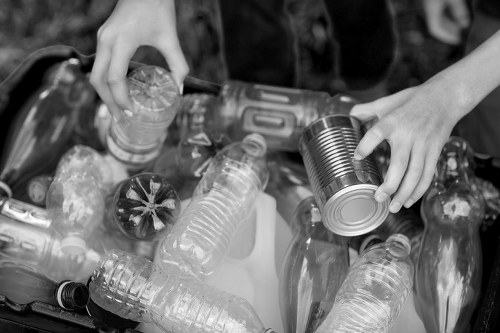
We set a clear recycling percentage target for commercial collections: an ambitious 70% recycling rate for waste diverted from landfill by 2030, with an interim target of 50% by 2026. Achieving this requires tailored segregation at source, reliable collections and strong local partnerships. For businesses seeking to contribute to a greener Rotherhithe, targets mean practical steps: separating dry recyclables, composting food waste where possible, and reducing mixed residual waste volumes.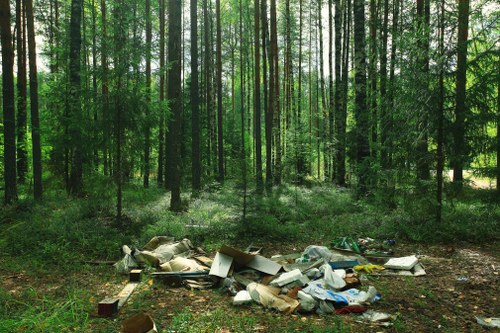
How Rotherhithe Separates Waste
The borough's approach to waste separation emphasises multiple streams: paper and cardboard, glass, mixed plastics & metals, food/organic waste and residual rubbish. Commercial waste rotherhithe services mirror this by offering container options and scheduled pickups that match those streams, helping traders, cafes and offices comply with Southwark-style separation guidance and improve recycling performance.Local Transfer Stations and Logistics
Our logistics network relies on local transfer stations and nearby depots that handle commercial loads efficiently. Collections from businesses in Rotherhithe are consolidated at strategic transfer points—serving Southwark and neighbouring boroughs—before materials are sent to specialised recycling centres. These transfer stations reduce double handling, cut vehicle mileage and ensure sorted materials follow the right recycling pathways.To reduce emissions further we invest in route optimisation and coordinated drop-offs. Rotherhithe commercial waste schemes aim to minimise time on the road while maximising load efficiency, which lowers costs and supports our low-carbon commitments. A compact, consistent network of transfer stations is fundamental to delivering an eco-friendly waste disposal area for dense urban neighbourhoods.
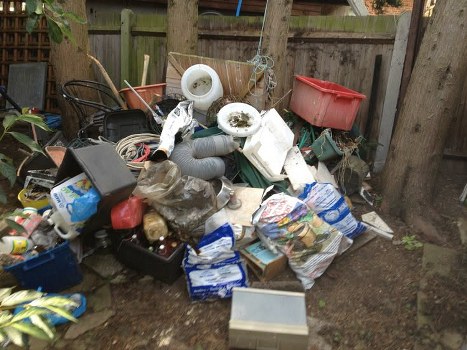 Partnerships with charities and reuse organisations form a key pillar of our circular approach. We work closely with reuse partners—such as local community hubs, furniture reuse centres and national charities—to divert serviceable items away from recycling and into reuse streams. These partnerships with charities ensure that usable assets get refurbished or sold, while textiles, electricals and furniture that still have value are kept out of the residual stream.
Low-Carbon Vans and Sustainable Fleet
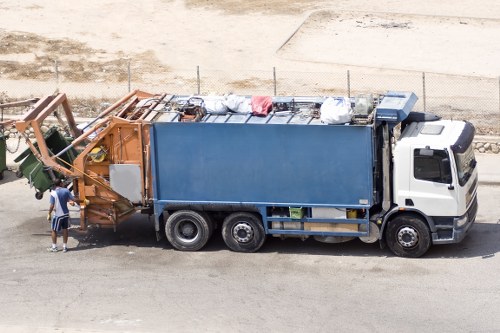 Fleet decarbonisation is vital to creating a truly sustainable rubbish area in Rotherhithe. Our low-carbon vans include electric vehicles for short urban runs, plug-in hybrids for mixed-route days and low-emission alternatives for heavier loads. These vehicles reduce local air pollution on narrow streets and along the riverside, supporting healthier neighbourhoods and aligning with London's Low Emission strategies.
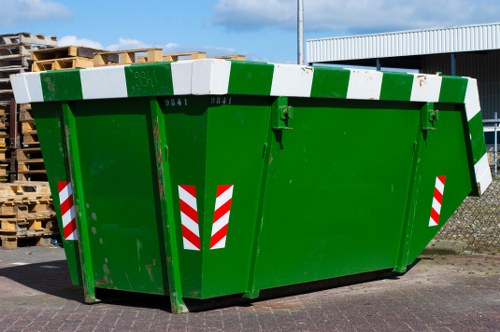 We pair low-emission vehicles with technology and operational practices: telematics for fuel-efficient driving, predictive routing to avoid congestion, and load management that reduces unnecessary trips. For businesses seeking Rotherhithe commercial rubbish solutions, this means lower carbon footprints on each collection, demonstrable sustainability credentials and a tangible contribution to local air quality improvements.
Delivering an eco-friendly waste disposal area also demands data and transparency. We provide reporting on tonnages, recycling rates and carbon reductions so organisations can track progress toward the 70% recycling percentage target. By combining better separation at source, local transfer station use, charity partnerships and a low-carbon fleet, the commercial waste rotherhithe model creates measurable sustainability gains for the whole borough.
Beyond collections we encourage practical reuse and reduction measures: bulk buying to cut packaging, repair and refurbishment programmes, and on-site segregation training. Rotherhithe commercial waste services also support seasonal campaigns—reducing waste during peak tourist and events periods—and target high-impact streams such as food waste and cardboard, where the most immediate recycling wins exist.
Implementation is collaborative: through meetings with business improvement districts, markets and hospitality clusters we design bespoke collection schedules, container allocations and recycling education. These tailored plans make the sustainable rubbish area not just a policy ambition but an operational reality for businesses large and small across Rotherhithe.
In summary, a future-proofed, sustainable approach to commercial waste in Rotherhithe hinges on clear targets, efficient transfer station networks, strong charity partnerships and a modern low-carbon fleet. By aligning these components—plus borough-friendly waste separation practices and active reuse channels—we create a practical, verifiable route to a greener, cleaner Rotherhithe.
